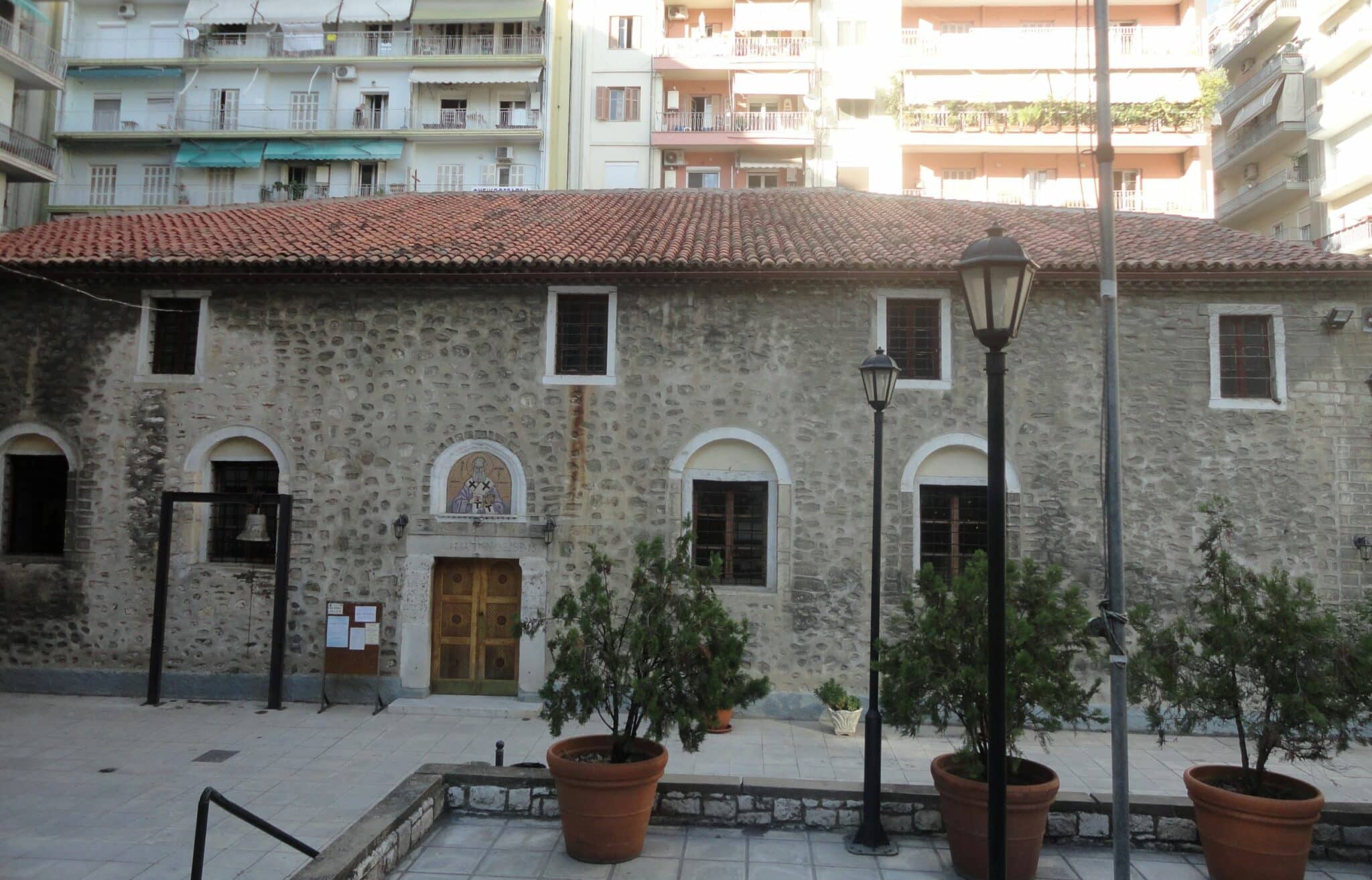
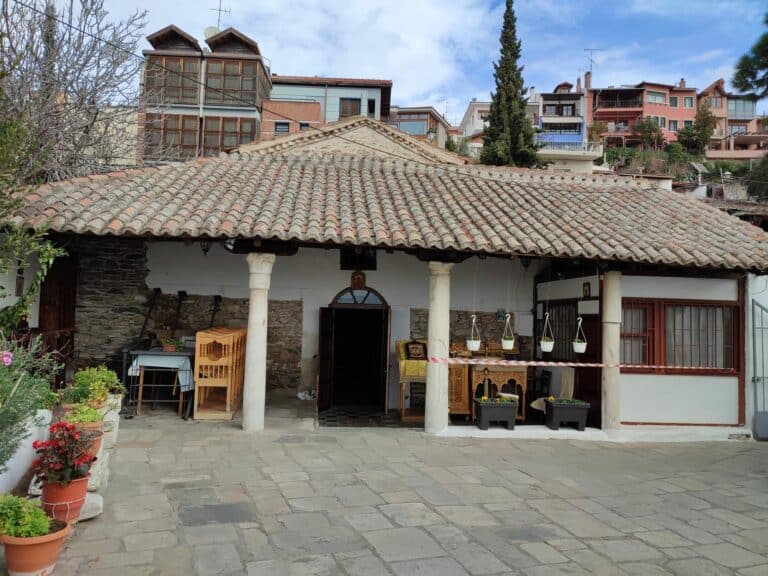
I am emotionally connected with this church because I was baptised, took the patron saint's name, and still attend services here. It’s one of the most historic churches in Thessaloniki, but unfortunately, not even my fellow citizens are aware of that, let alone visitors of the city. It is not known when exactly the first building was constructed. However, during the Ottoman period (1430-1912), it was the very center of the Greek community. The most important Greek schools surrounded that iconic monument.
In 1817 the older structure burnt down. The parishioners rebuilt their church within a year! The new building was consecrated on 15th November 1818, as testified by an inscription on the lintel of the southern portal. During the Greek Independence War in the 1820s, the Ottomans turned the church into a jail and let the Greek prisoners die from hunger and thirst.
The icons are really beautiful. I urge you to pay specific attention to the icon that depicts the Annunciation of the Virgin on the right portion of the iconostasis (the structure that separates the sanctuary from the main church and is filled with icons). If you compare it with masterpieces of Netherlandish or Flemish painting, such as the Arnolfini Portrait by Jan Van Eyck, you will realize the affinity between them! Sometimes visitors are even able to listen to awesome Byzantine hymns from the loudspeakers of the interior! Another unique experience in a place of martyrdom and memory, away from crowds!

Find your way with 96 Insider Tips from our Local Spotters
Loved this Spot?Join your international community. Share your favs and become part of our international community!
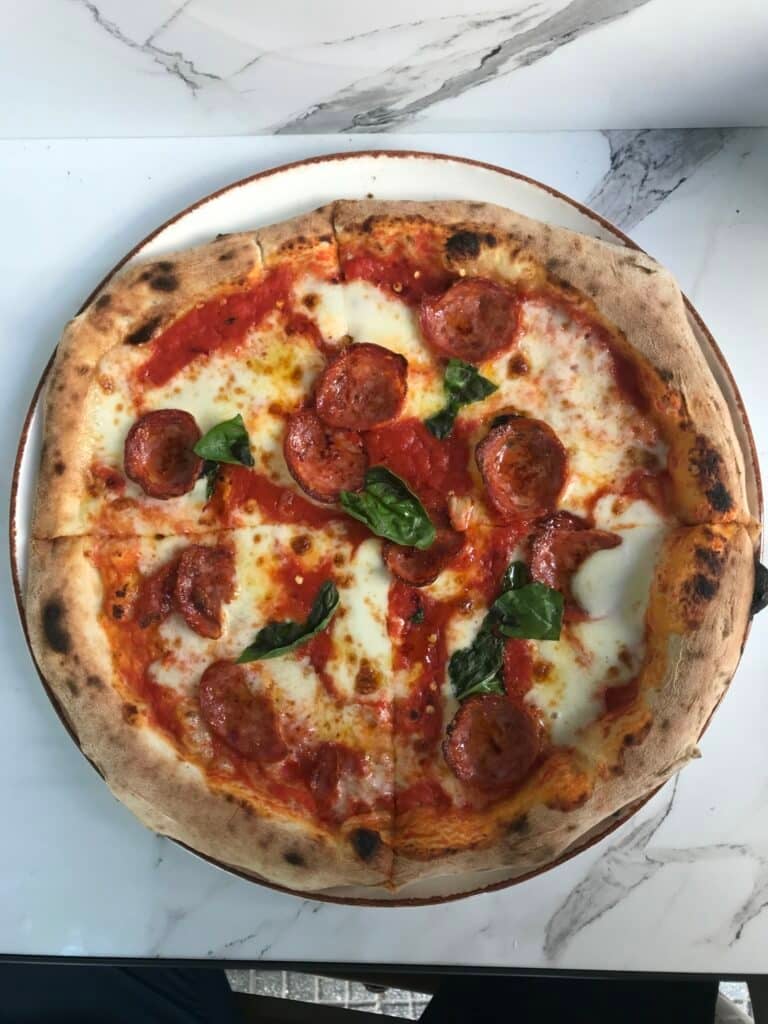
I have tried many pies in many spots, not exclusively in Thessaloniki, but those that I have really fallen in love with are the pies of “Paradosiako”! That Greek word means “Traditional”.
by
A must-see gem of Thessaloniki is a tiny church in Ano Poli (Upper City) district, hidden behind an enclosure. Its name is Agios Nikolaos Orfanos (St. Nicholas of the Orphans).
by
The building dates back to ca. 1200 and it was in function until 1940! During the Ottoman period, it was known as Koule Hamam. It was constructed in a period during which the tradition of public baths was revived after the Late Antiquity.
by
In the eastern part of Thessaloniki, you can find the “paradise of meat”, the restaurant “Nea Diagonios” (literally, “New Diagonal”). Although the area is not touristy, it is worth visiting (don’t worry, there is a menu in English too).
by
Over 40 different interactive exhibits are waiting for you to experience incredible tricks, take awesome photos and discover the secrets and phenomena behind them!
by
The best place to have a traditional breakfast, which hotels usually don’t offer, is “Katselis”! There are two branches; one near the train station and one in the city's eastern part.
by
One of my favorite Byzantine monuments in Thessaloniki is the church of the Holy Apostles. What makes it unique is the combination of gorgeous frescoes and mosaics; even though the latter, only fragments are preserved!
by
The current building was constructed in 1900 according to the design of the prominent Italian architect Vitaliano Poselli, who embellished our city with monuments of exceptional beauty.
by
It was constructed in 1903 and is dedicated to the Holy Mother of God (in Armenian: Sourp Asdvadzadzin). From an architectural point of view, Poselli chose the eclectic style, that is, to combine different traditions.
by
What makes this church unique are the neo-gothic pointed arches and the luminous stained-glass windows, which depict Saints and biblical scenes.
by
Particularly beautiful is the small dome with the depictions of Christ “Pantokrator” (Almighty) and the Apostles. And the neoclassical bell tower...
by
96 Insider Tips from our local Spotters
Authentic Stories by Real People
Escape the Crowd & Travel Slow 🐌
✓ 0 Insider Tips from our local Spotters
✓ 96 Insider Tips